Certified Safety Experts: ISO, SACPCMP, NEBOSH & More
before-you-appoint-a-solar-contractor
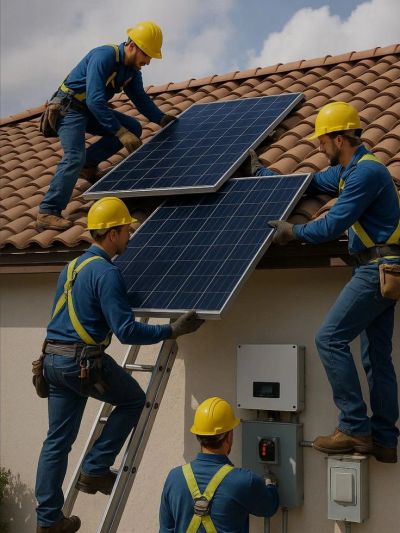
Before You Appoint a Solar Contractor in South Africa
Do not let a solar contractor onto your roof without checking compliance first.
Solar can reduce electricity costs, improve business continuity and add value to your property. But a poor or uncontrolled solar installation can expose you to serious risk.
A solar contractor is not only installing panels. They may be working at heights, drilling into roof structures, routing electrical cables, installing inverters, connecting batteries, altering electrical installations and connecting generation equipment to your property.
Before the work starts, you need to know one thing:
Is this contractor legally, electrically and safety compliant — or are they just good at installing panels?
The risk lies with more than the contractor
Many clients only ask three questions:
- What will it cost?
- When can you start?
- How much electricity will I save?
Those are important questions, but they are not enough.
You should also ask:
- Can the contractor produce a site-specific safety file?
- Has the roof work been risk-assessed?
- Is there a fall-protection plan?
- Are workers trained and medically fit where required?
- Is there proof of electrical competence?
- Will a valid Certificate of Compliance be issued?
- Is the inverter type-approved?
- Will the SSEG / embedded-generation registration evidence be provided where required?
- Is there proof of insurance?
- Is there a handover pack at the end of the project?
If these questions are not answered before work starts, the client may be left with the risk after the contractor leaves.
One solar mistake can become your problem
A solar installation can go wrong in many ways:
- A worker falls from your roof
- A roof sheet breaks under a worker
- A skylight is stepped on
- A DC cable is not isolated correctly
- A fire starts after poor installation
- An inverter is not correctly certified
- The system is not registered where required
- The installation causes back-feed into the grid
- The insurer asks for proof after a loss
- The municipality, Eskom or landlord asks for compliance evidence
- The contractor disappears after payment
When that happens, the question is no longer whether the panels are producing power.
The question becomes:
Who allowed the work to start without proper proof?
SHEQ4SME helps clients protect themselves before solar work starts
SHEQ4SME assists homeowners, businesses, body corporates, schools, farms, factories, landlords and property managers to check whether a solar contractor has the correct health, safety and compliance documentation before the contractor starts work.
We help you ask the right questions, request the right documents and identify the gaps before the risk lands on your property.
Our Solar Client Compliance Check can include
- Review of the contractor’s safety file
- Review of site-specific risk assessment
- Review of working-at-heights controls
- Review of fall-protection plan
- Review of the method statement
- Review of the emergency plan
- Review of legal appointments
- Review of PPE and inspection registers
- Review of training and competency evidence
- Review of medical fitness evidence, where applicable
- Review of electrical compliance evidence
- Review of CoC planning and handover requirements
- Review of the inverter certificate evidence
- Review of SSEG / embedded-generation registration evidence, where applicable
- Client pre-start checklist
- Project handover evidence checklist
Documents to request before the contractor starts
Before appointing a solar contractor, ask for the following:
- Company registration documents
- Proof of insurance
- Letter of Good Standing / COIDA evidence
- Proof of electrical competence
- Site-specific risk assessment
- Solar installation method statement
- Working-at-heights plan
- Fall-protection plan where required
- Emergency and rescue plan
- PPE and equipment inspection records
- Ladder and harness inspection records
- Electrical isolation procedure
- Certificate of Compliance plan
- Inverter type-test certificate
- SSEG registration documentation,n where applicable
- Final project handover pack
If the contractor cannot provide these documents, you should pause before allowing the work to start.
For businesses, factories, schools and property managers
If solar work is done at your premises, you need more than a quotation. You need proof that the contractor can work safely and that the project has been planned, risk assessed and controlled.
A cheap solar quote can become expensive if it results in:
- Injury
- Fire
- Roof damage
- Electrical non-compliance
- Insurance problems
- Legal exposure
- Business interruption
- Failed handover
- Unregistered grid-connected generation
SHEQ4SME helps you create a simple pre-start control process so that no solar contractor begins work without basic compliance evidence.
For homeowners and residential clients
Even at a private home, you should not ignore safety and electrical compliance. Solar work often involves roof access, electrical alteration, inverter installation and possible grid connection.
Before you pay the deposit, ask the contractor:
“Will you give me the safety, electrical and registration evidence in writing?”
If the answer is vague, the risk is already visible.
The SHEQ4SME outcome
With SHEQ4SME, you can make a better decision before work starts.
You receive a clear view of:
- What the contractor has
- What is missing
- What must be corrected
- What evidence must be included in the handover pack
- Whether the contractor should be allowed to start
We help you move from blind trust to verified compliance.
Do not wait until after the installation.on
After the panels are installed, it is much harder to fix missing safety evidence, poor electrical documentation, roof damage, missing certificates or registration gaps.
The safest time to control the project is before the contractor arrives on site.
Need help checking a solar contractor?
Contact SHEQ4SME before you appoint your solar contractor.
We will help you check the documentation, identify the risks and protect your property, people and legal position before work starts.
Client Risks When Solar Fails
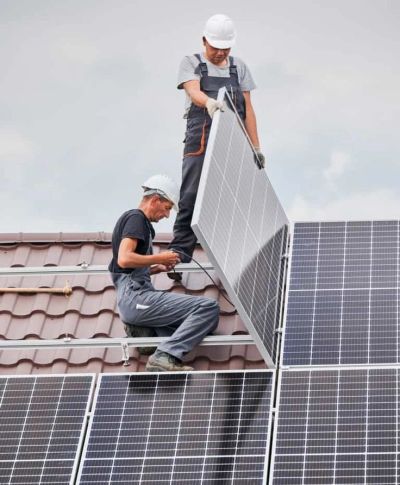
1. Fatal Incidents?
Before you allow a solar contractor onto your roof, understand this
If a solar contractor makes a mistake and someone dies, the problem does not stay with the contractor only.
The investigation will not stop at the worker who fell, the electrician who made the connection, or the supervisor who failed to control the job. The investigation will also look at the client.
That means the homeowner, business owner, landlord, body corporate, school, factory, farm, property manager or estate manager may have to answer serious questions.
The first question will be simple:
Who allowed the contractor to start work?
The second question will be worse:
What proof did the client have that the contractor was competent, legally compliant and safe before the work started?
“It was the contractor’s fault” may not be enough.
Many clients believe that once they appoint a contractor, the risk moves away from them.
That is a dangerous assumption.
If a solar contractor is working on your property, the contractor remains responsible for their workers and their work. But the client may still be exposed if the client failed to check basic legal, safety and competency requirements before allowing the work to begin.
Under the South African Occupational Health and Safety Act, the law not only protects employees. It also protects other persons who may be affected by work activities. Section 9 requires every employer to conduct their undertaking so that persons other than employees are not exposed to health and safety hazards, as far as reasonably practicable.
In plain English:
If work on your property can harm people, you cannot simply close your eyes and say, “That was the contractor’s problem.”
Solar work is not low-risk work
Solar installation can involve:
- Work at heights
- Roof access
- Fragile roof sheets
- Skylights
- Ladders
- Harnesses
- Drilling into structures
- Electrical isolation
- DCnt
- Inverters
- Batteries
- Fire risk
- Cable routing
- Roof loading
- Grid connection
- SSEG / embedded-generation registration
- Final electrical certification
One mistake can kill a worker, injure a resident, damage a building, start a fire or create electrical danger for people who were never part of the installation team.
After a fatality, the paperwork becomes evidence
Before an incident, safety documentation feels like admin.
After a fatality, it becomes evidence.
The client may be asked to produce:
- The contractor appointment
- The approved quotation and scope of work
- The contractor’s safety file
- The site-specific risk assessment
- The method statement
- The working-at-heights plan
- The fall-protection plan
- Proof of worker training
- Proof of medical fitness was required
- Proof of supervision
- Proof of insurance
- Proof of COIDA / Letter of Good Standing
- Proof of electrical competence
- Proof of the electrical Certificate of Compliance process
- Proof of inverter and system compliance
- Proof that unsafe work was stopped
- Proof that the client checked the contractor before work started
If the client cannot produce these documents, the client has a problem.
Not because the paperwork itself saves lives, but because the missing paperwork shows that the risk may not have been properly controlled.
The client’s legal duties under construction work
The Construction Regulations define a client as any person for whom construction work is performed. They also define construction work broadly, including alteration, renovation, repair, addition to a building, civil work, excavation and similar work.
Solar work can fall into this space where the installation involves roof work, structural fixing, building alteration, cable routes, electrical installation work, working at heights or construction-related activity.
Where the Construction Regulations apply, the client has duties before work starts. These include preparing a baseline risk assessment, preparing a site-specific health and safety specification, ensuring that the contractor has the necessary competence and resources, checking COIDA's good standing, approving the contractor’s health and safety plan, ensuring audits and document verification, stopping unsafe work, and ensuring that the health and safety file is kept and maintained.
That means a business, factory, school, estate, body corporate, landlord or property manager cannot just say:
“We appointed a solar contractor, so it is their responsibility.”
The law expects the client to take reasonable steps.
A private homeowner is not immune to consequences
There are specific Construction Regulation exclusions for certain single-storey dwelling work where the client intends to live in the dwelling. But that does not mean homeowners should ignore safety.
A homeowner can still face serious consequences after a fatality:
- Police involvement
- Department of Employment and Labour investigation
- Insurance scrutiny
- Civil claims
- Delays to the project
- Refusal by the contractor’s insurer
- Disputes over who controlled the site
- Reputational and emotional consequences
- Questions from the deceased worker’s family
- Questions around electrical compliance and fire risk
A private home is not a legal vacuum.
If someone dies on your roof, the question will still be asked:
Did you take reasonable steps before allowing the contractor to work?
What happens after a person dies?
If a person dies during solar work, the matter can trigger a formal process.
The incident must be reported where it arises out of or in connection with work or the use of plant or machinery. Inspectors may investigate. A formal inquiry may follow. Where a person dies, an inquest or further legal process may also be required.
The site may be stopped. The contractor’s file may be seized or reviewed. Witnesses may be interviewed. The safety file, risk assessment, appointments, training records and proof of supervision may be examined.
The client may be asked:
- Who appointed the contractor?
- What safety documents were requested?
- Was the safety file reviewed before work started?
- Was working at heights identified?
- Was fall protection required?
- Was there a rescue plan?
- Was the contractor competent?
- Was the contractor insured?
- Was the contractor in good standing with COIDA?
- Did the client or property manager stop unsafe work?
- Was the contractor allowed to continue despite the obviously unsafe conduct?
- Was the cheapest contractor chosen without checking safety capability?
- Was the work rushed?
- Were tenants, staff, children, customers or the public exposed?
These are not small questions.
They go directly to whether the client acted reasonably.
Section 37: the danger of contractor liability
Section 37 of the OHS Act deals with acts or omissions by employees and mandataries. A contractor can be a mandatary.
In simple terms, if a contractor does or fails to do something that would be an offence under the OHS Act, the employer or user may face a presumption of responsibility unless they can prove the required defence.
A written agreement between the client and the contractor is important. But a signed document alone is not a magic shield.
The client must be able to show that reasonable steps were taken to prevent the unsafe act or omission.
That means the client should not only have a contract. The client should have a control process.
What can happen to the client?
If the contractor causes a fatality, the client may face one or more of the following consequences:
1. Investigation by the Department of Employment and Labour
Inspectors may investigate the incident, request documents, inspect the site and interview relevant persons.
2. Site stoppage or prohibition
Work may be stopped if it poses a threat to health and safety. This can delay the project and create financial loss.
3. Formal inquiry or inquest
A fatality can lead to a formal inquiry and/or inquest process. The client may be required to provide evidence.
4. Criminal exposure
If the client failed to comply with applicable duties under the OHS Act or Construction Regulations, criminal consequences may follow.
5. Section 37 exposure
If the contractor was acting as a mandatary and the client cannot prove proper written arrangements and reasonable steps, the client may have difficulty defending its position.
6. Civil claims
Depending on the facts, the family of the deceased, injured third parties, affected businesses, tenants, insurers or other parties may pursue claims or disputes.
7. Insurance problems
Insurers may ask whether the contractor was competent, whether work was legally compliant, whether electrical certification was valid, whether the installation was registered where required, and whether reasonable precautions were taken.
8. Reputational damage
For businesses, schools, estates, factories, farms and property managers, a contractor fatality can damage trust, brand reputation and stakeholder confidence.
9. Project delays and extra costs
The installation may stop. Evidence may need to be preserved. Replacement contractors may be needed. Defects may need to be corrected. Legal advice may be required.
10. Personal consequences for decision-makers
Managers, directors, trustees, estate managers, facilities managers and property owners may all be asked why the contractor was allowed to work without proper checks.
The uncomfortable truth
The cheapest solar contractor may become the most expensive decision you ever make.
A contractor who cannot produce a safety file before work starts may also be unable to defend the work after an incident.
A contractor who cannot explain fall protection, rescue planning, electrical isolation, CoC requirements and SSEG evidence is not ready to work on your property.
The client must never allow solar work to start on blind trust.
What the client must do before solar work starts
Before appointing a solar contractor, ask for:
- Contractor company details
- Proof of insurance
- COIDA Letter of Good Standing
- Proof of electrical competence
- Site-specific safety file
- Risk assessment for the actual site
- Solar installation method statement
- Working-at-heights plan
- Fall-protection plan
- Rescue plan for fall-from-height emergencies
- PPE and equipment inspection records
- Training and competency records
- Medical fitness evidence is required
- Electrical isolation procedure
- Certificate of Compliance process
- Inverter compliance evidence
- SSEG / embedded-generation registration evidence, where applicable
- Final handover pack checklist
If the contractor cannot provide these, do not allow work to start.
SHEQ4SME can help before the risk lands on your property
SHEQ4SME helps clients check whether solar contractors are legally, electrically and safety ready before they begin work.
We assist with:
- Contractor document review
- Safety file review
- Working-at-heights compliance check
- Risk assessment review
- Fall-protection document review
- Pre-start contractor checklist
- Client health and safety specification
- Contractor appointment documentation
- Solar project handover evidence checklist
- Gap report before the contractor starts
The best time to control a fatality risk is before the contractor climbs onto the roof.
Final warning
After a fatality, everyone asks for proof.
Proof that the contractor was competent.
Proof that the risks were known.
Proof that the client checked the file.
Proof that fall protection was planned.
Proof that electrical safety was controlled.
Proof that unsafe work was stopped.
Proof that reasonable steps were taken.
If you cannot prove it, you may have to explain it.
Before you appoint a solar contractor, let SHEQ4SME check the compliance gaps.
2. Failed Solar Costs
A solar system is meant to save money. But if the contractor’s paperwork, safety file, CoC, SSEG registration evidence and installation records are not in order, the project can quickly become a financial problem.
The contractor may leave.
The inspection may fail.
The CoC may be refused.
The system may not be registered.
The bank may delay payment.
The insurer may ask questions.
The municipality or Eskom may require correction.
The client may have to pay a second contractor to fix the first contractor’s work.
That is when a solar investment becomes a solar liability.
The hidden cost is not the safety file
The hidden cost is the stoppage.
Every day the system is not operational, the client continues paying for electricity, diesel, lost production or business interruption. Every defect creates new inspection costs, rework costs, legal costs and management time.
A small residential problem can cost tens of thousands of rand.
A commercial solar stoppage can cost hundreds of thousands.
An industrial failure can cost millions.
The cheapest contractor is not cheap if the paperwork fails.
Before the contractor starts, ask these questions
Can the contractor provide:
- A site-specific safety file?
- A working-at-heights plan?
- A fall-protection plan?
- Proof of electrical competence?
- A CoC process?
- An inverter type-test certificate?
- An SSEG / EGI test report?
- COIDA in good standing?
- Insurance proof?
- A handover evidence pack?
If the answer is no, the client is carrying risk before the first panel is installed.
SHEQ4SME protects the client before the loss happens
SHEQ4SME helps homeowners, business owners, schools, farms, landlords, property managers, body corporates, banks and finance providers check solar contractors before work starts.
We review the contractor’s safety file, working-at-heights controls, electrical compliance trail, SSEG evidence and handover documentation.
The goal is simple:
Stop the problem before the project stops.
Do not wait for the inspector, insurer, bank or municipality to find the gap after the money has been spent.
Let SHEQ4SME check the contractor before the contractor climbs onto your roof.
3. Fire & Insurance Risks
A solar installation is supposed to save money. But if it is badly installed, poorly documented or not legally compliant, it can become one of the most expensive risks on your property.
The real danger is not only the fire.
The real danger is the fire, followed by this sentence from your insurer:
“Please send us the Certificate of Compliance, test report, installation records, inverter certificate, as-built drawings, contractor details, SSEG registration evidence and proof that the system was installed by a competent contractor.”
If you cannot produce the documents, your claim may be delayed, reduced or rejected.
A solar fire can cost far more than the solar system
A solar fire can damage:
- panels;
- inverters;
- batteries;
- DB boards;
- cabling;
- roof sheets;
- roof trusses;
- ceilings;
- insulation;
- stock;
- machinery;
- vehicles;
- IT equipment;
- neighbouring property;
- tenant property;
- business operations.
For a home, the uninsured loss can run into hundreds of thousands or millions of rand.
For a business, the loss can become catastrophic. You may lose the building, stock, production, customers, rental income and months of trading.
The insurer will ask for proof.
After a solar-related fire, the insurer may ask for:
- a valid electrical Certificate of Compliance;
- the electrical test report;
- proof that the contractor was registered and competent;
- inverter and equipment compliance certificates;
- as-built drawings;
- commissioning records;
- maintenance records;
- SSEG registration evidence, where applicable;
- proof that the installation was disclosed and added to the policy;
- proof that the system was installed according to legal and insurance requirements.
If these documents are missing, the client is exposed.
The painful cost of non-compliance
A missing safety and compliance pack can lead to:
- claim rejection;
- delayed payout;
- reduced settlement;
- legal disputes;
- forensic investigation costs;
- reinstallation costs;
- business interruption;
- temporary power costs;
- loan repayments on a destroyed system;
- loss of customers;
- damage to reputation.
A cheap contractor becomes very expensive when the insurer refuses to pay.
SHEQ4SME protects you before the fire happens
SHEQ4SME helps clients check the solar contractor before the contractor starts work.
We review the safety file, working-at-heights controls, electrical compliance trail, CoC readiness, contractor competence, SSEG evidence, fire-risk controls and handover documentation.
The goal is simple:
Make sure the documents are in place before the loss happens — not after the insurer asks for them.
Before you allow a solar contractor onto your roof, let SHEQ4SME check the risk.